Most visitors rush through Tashkent. Give it two days: the bazaar, the metro and the Soviet-era squares explain modern Uzbekistan better than any museum.
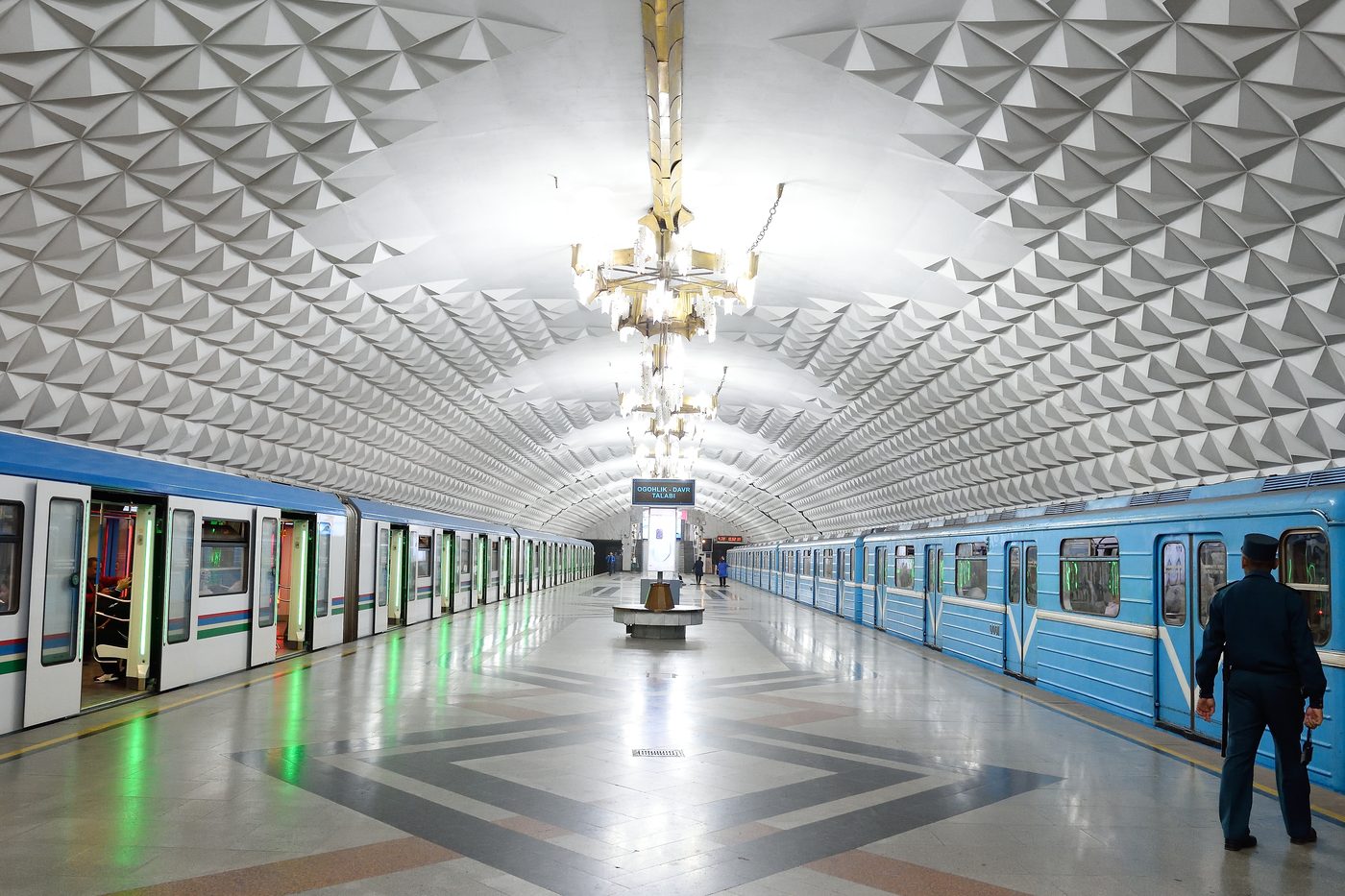
Beruni station, Tashkent Metro — Wikimedia Commons, CC BY 4.0, photo by Tim Adams.
What to see
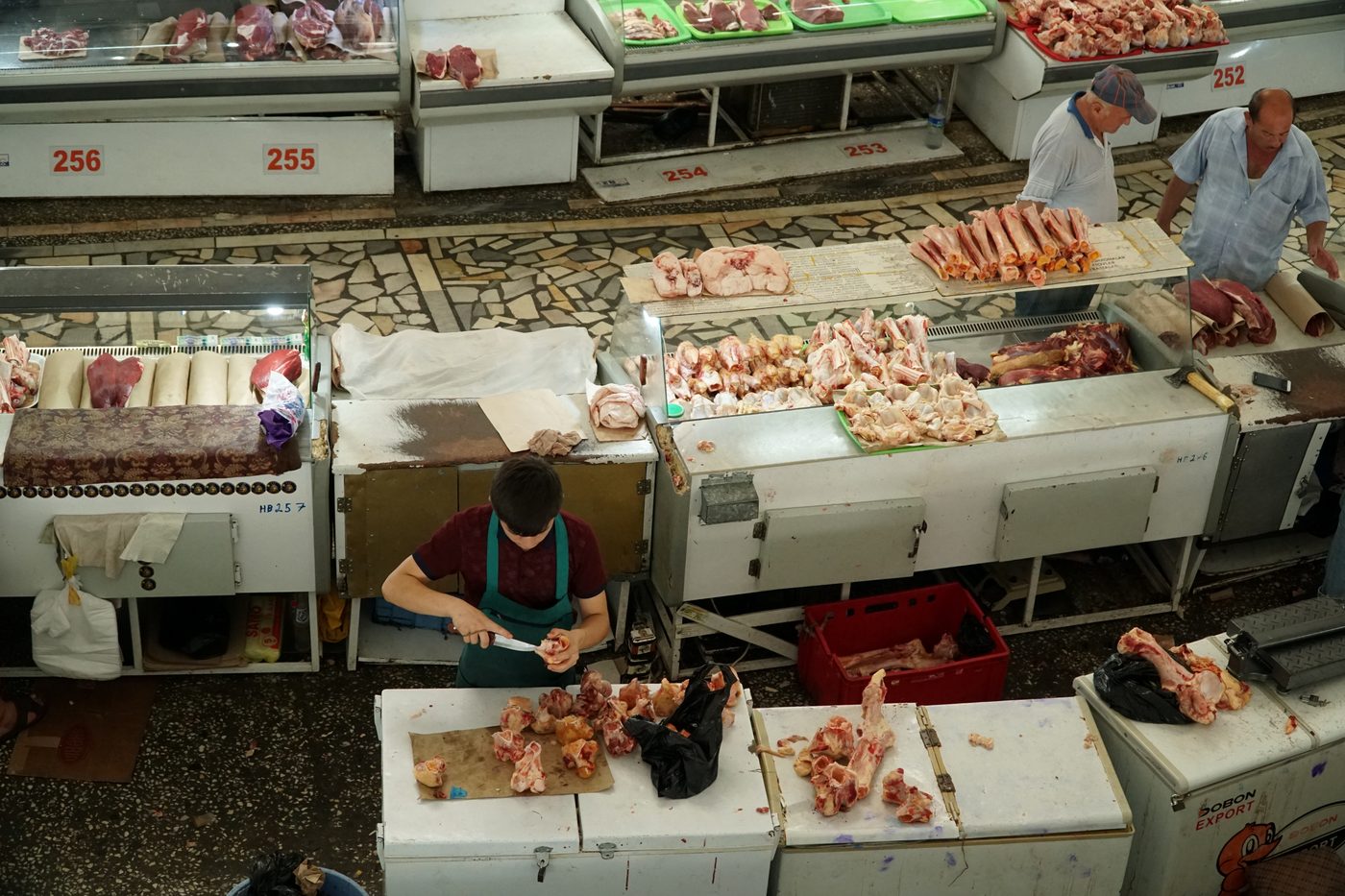
Chorsu Bazaar — the old city's domed market. Go in the morning for bread, dried fruit, spices and the full noise of the place.
Tashkent Metro — the Soviet-era stations are famously decorated; Beruni and Alisher Navoi are among the most photographed. A ride costs very little — keep a transport card or small cash handy.
Amir Timur Square and the surrounding museums — the formal centre, with the Amir Timur Museum and Independence Square nearby.
Kukeldash Madrasah — a 16th-century madrasah near Chorsu, still in use as a religious school.
Things to do, by category
Beyond the highlights above, Tashkent rewards a slower look. The lists below cover the places visitors ask about most — one category per half-day is a good pace.
Sights.
Hazrati Imam Complex — the old city's religious heart: Tillya Sheikh Mosque, Barak Khan Madrasah, the Mausoleum of Abu Bakr Kaffal Shashi, and the Muyi Muborak library, which holds a 7th-century Uthman Quran.
Kokaldash Madrasah — a 16th-century madrasah on Beruni Avenue, steps from Chorsu, still in use as a religious school.
Palace of Grand Duke Nicholas — the ornate former residence of Grand Duke Nicholas Constantinovich, a short walk from Amir Timur Square.
Alisher Navoiy Theater — Tashkent's grand opera and ballet house; check the programme if you want an evening out.
Museums.
Museum of Applied Arts — ceramics, textiles, embroidery and jewellery displayed in a traditional courtyard house.
State Museum of Arts — Uzbek and Russian painting and sculpture.
State Museum of the Temurids — the Timurid era, beside Amir Timur Square.
State Museum of History of Uzbekistan — the country's story from ancient settlements to independence.
Mosques.
Minor Mosque — white marble, opened in 2014, room for more than 2,400 worshippers, on the Little Ring Road.
Tillya Sheikh Mosque — part of the Hazrati Imam Complex, with two tall minarets.
Hazrati Imom Mosque — the complex's main mosque, built in 2007.
Dumbirabod Mosque — an old-city mosque, quieter than the big names.
Parks.
Amir Timur Square — the equestrian statue, gardens and fountains at the formal centre of the city.
Navruz Park, Tashkent City Park and the Japanese Garden — three different green escapes within the city.
Tashkent Botanical Garden — a large, shady garden, best in spring and autumn.
Magic City Park — the amusement complex with themed streets, rides, an aquarium, a cinema and a castle zipline; busiest at weekends.
Three sights in focus
Hazrati Imam Complex
The spiritual centre of old Tashkent, built around the burial place of the city's first imam, Kaffal Shashi. Come for the tilework and the courtyards, and for the Muyi Muborak library's 7th-century Uthman Quran — one of the oldest Quran manuscripts in the world. The complex is free to enter, according to recent guides.
Address: Qorasaroy Street, old city.
Chorsu Bazaar
Tashkent's biggest and oldest bazaar, trading for over 2,000 years, under seven tiled domes. Spices, fruit and vegetables sit beneath the largest dome; the smaller domes hold craft workshops for jewellery, pottery and carpets. The food court is on the Beruni Avenue side. Go in the morning, when it is at its liveliest.
Address: Eski Juva, by Chorsu metro station. Open daily 05:00–20:00 (Wikivoyage, December 2024).
Minor Mosque
The white-marble mosque opened on 1 October 2014, gleaming against a blue sky in a way the older brick mosques do not. Inside is a large circular hall with a gilded mihrab; the mosque holds more than 2,400 worshippers. Entry is free. Women cover their hair inside, so bring a scarf.
Address: Little Ring Road (Kichik Xalqa Yo'li), Tashkent.
Where to eat
Plov is the dish to plan a meal around — rice, carrots and meat cooked in a giant kazan, served for lunch, and gone when it is gone.
Besh Qozon — Tashkent's famous plov centre, founded in 1999, where you can watch the plov being cooked in enormous cast-iron cauldrons over open flame before you sit down. Recent guides put a portion at around 50,000 som. Go before the lunch rush.
Chorsu Bazaar food stalls — the food court on the Beruni Avenue side of the bazaar, for plov, shashlik, somsa and lagman eaten standing up among the shoppers.
Dishes to try anywhere: plov, somsa (baked pastry, usually meat or pumpkin), shashlik (grilled skewers), lagman (hand-pulled noodles) and non, the round tandoor bread.
Address for Besh Qozon: 1 Guards Colonel Khodjaev Street, Yunusabad, near the TV Tower.
Shopping
Chorsu Bazaar — the first stop for souvenirs: ceramics, textiles, carpets and jewellery in the craft domes, and dried fruit and nuts to take home.
Alay Bazaar — produce, dried fruit and nuts, textiles, and a two-storey jewellery complex. It sits close to the tourist hotels, so prices rise if you look like a tourist — bargain.
Abu Saxiy — a modern multi-level complex on the Ring Road for clothing, electronics and toys, merging into the Chilonzor shopping centre.
Tashkent City Mall — the country's largest mall, opened in March 2024, with international brands; banks in the lower level change US dollars and euros.
Bargaining is expected in the bazaars; in malls, prices are fixed.
Addresses: Alay Bazaar, Yahyo Gulyamov 7, by Abdulla Qodiriy metro (daily 07:00–17:00). Abu Saxiy, Ring Road at Bunyodkor (Tuesday–Sunday 09:00–18:00). Tashkent City Mall, Botir Zakirov 7.
Day trips from Tashkent
Chimgan Mountains and Charvak Reservoir — about 80–92 km, roughly 1.5–2 hours each way. Hike, ride the Amirsoy cable car to Kumbel Ridge (2,300 m), and swim in Charvak in summer. Check whether the cable cars are running — they do not always operate on weekdays.
Amirsoy Resort — the mountain resort in the same area, with skiing in winter and cable cars in summer.
Fergana Valley — honest warning: this is not a comfortable day trip. It is about 305 km, roughly 4.5 hours' drive each way (the train takes about 5 hours 15 minutes; flights are about 1.5 hours in the air). Go overnight if you want the valley's craft towns, or fly in and out in a day.
Sources for the new sections, checked 27 October 2026: Wikivoyage Tashkent guide (listings updated December 2024), Outlook Traveller, GetYourGuide, Tripadvisor, Wanderlog, Advantour, Orexca, Rome2Rio, The City Lane and National Geographic's plov guide. Hours, prices and entry rules change — check before you go.
How many days
Two days is right: one for the old city and bazaar, one for the metro, squares and museums. Tashkent is also the natural
arrival and departure point — the international airport and the main railway station are here.
Getting there & around
Fly into Tashkent International Airport (TAS). The metro, buses and taxis cover the city; the
Afrosiyob high-speed train runs from Tashkent to Samarkand and on to Bukhara — book a few days ahead in peak season.
For Khiva, fly to Urgench or take the long desert road.
Practical tips
Summer afternoons reach about 36 °C; January days average around 7 °C.
Tashkent is the priciest city in the country for hotels and dining — budget a little more here than in Bukhara or Khiva.
Watch for pickpockets in Chorsu Bazaar and on the metro, as in any busy market.
Photo: Chorsu Bazaar, Tashkent — Wikimedia Commons, CC BY-SA 4.0, photo by Adam Harangozó.